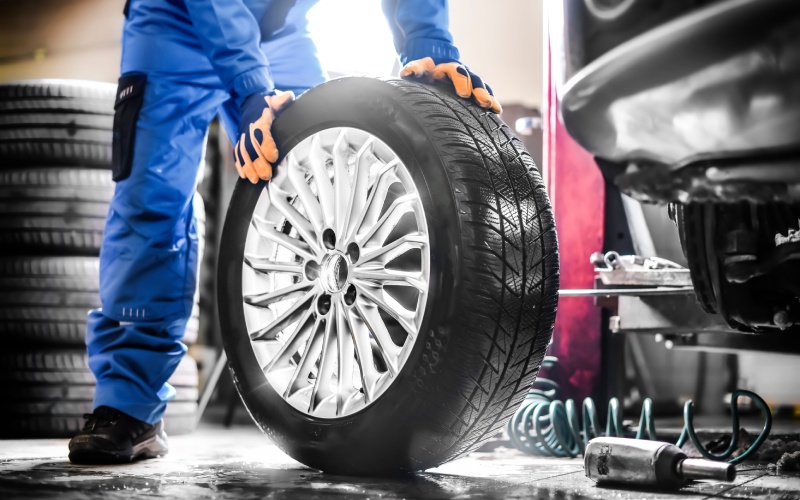
Montgomeryville Acura - How to Choose the Right Acura Tires for Harleysville, PA Roads
Harleysville driving blends steady-paced runs on PA-63 (Sumneytown Pike) and PA-113, quick hops over to I-476 for the Northeast Extension, and neighborhood loops where comfort and quiet matter more than outright grip. Picking the right tires for your Acura—Integra, RDX, MDX, or ADX—starts with decoding what the sidewall is telling you, then aligning that information with how and where you actually drive. This guide walks through sizing, load/speed ratings, AWD considerations for SH-AWD, rotation and alignment cadence, and the ordering and installation process that helps your new set feel right from mile one.
Know your tire code: size, load index, and speed rating
Your Acura’s tire size is more than three numbers and a letter—it is a roadmap to fit, feel, and safety. The owner’s manual and door-jamb placard show Acura’s recommended size and PSI for your exact trim, wheel diameter, and suspension tune. Reading the sidewall helps you compare apples to apples if you are weighing different all-season or performance options that still meet Acura’s specs.
- Section width: The first number (in millimeters) influences steering response and how the tire sits on the wheel.
- Aspect ratio: The sidewall height as a percentage of width; lower ratios sharpen response but reduce impact absorption.
- Construction: “R” indicates radial, which is standard for modern passenger vehicles and crossovers.
- Wheel diameter: The rim size in inches—critical for fit with OEM wheels and brake clearances.
- Load index: The per-tire weight capacity; pick equal or higher than Acura’s placard for safety and durability.
- Speed rating: Heat-resistance and stability at speed; match or exceed Acura’s spec to maintain handling confidence.
Harleysville’s blend of rural pavement, town centers, and highway ramps rewards a tire with balanced sidewall compliance and predictable breakaway. Sticking with Acura’s original load and speed ratings keeps chassis tuning—steering effort, ride frequency, and ABS/ESC intervention—feeling as intended.
All-season, performance, or all-weather—what fits Harleysville best?
If your Acura is a daily driver, a premium all-season often hits the sweet spot for Sumneytown Pike commutes and weekend trips toward Green Lane. Touring all-seasons emphasize quiet and longevity; grand-touring all-seasons add sharper steering; ultra-high-performance all-seasons boost grip for spirited backroads while retaining cold-weather compliance. If you frequently carve cloverleafs or prioritize crisp turn-in, a performance-leaning all-season can satisfy without the compromises of a summer-only tire. Meanwhile, “all-weather” tires carry winter-focused tread compounds and certifications while remaining acceptable year-round—useful if you sometimes visit higher elevations and want extra foul-weather traction without swapping sets. For MDX and RDX owners, consider the tire’s load rating and sidewall reinforcement to preserve towing stability and reduce squirm during quick maneuvers on PA-113.
SH-AWD and tread matching: protect your driveline
Acura’s SH-AWD can vary torque side-to-side and front-to-rear, which feels fantastic on a sweeping on-ramp—but matching rolling circumference across all four corners is essential. Significant differences in tread depth or diameter can cause driveline stress over time, particularly on long, straight highway sections where the system expects comparable wheel speeds.
- Replace in sets: On SH-AWD, four-tire replacement is ideal; if two is unavoidable, closely match remaining tread depth.
- Rotate regularly: Follow your Maintenance Minder or rotate every 5,000–7,500 miles to even out wear patterns.
- Measure tread depth: Ask for a tread report at each service; catch inside-edge wear early before it cascades.
- Align with intent: A precision alignment after new tires prevents feathering and protects your investment.
- Balance matters: Road-force balancing helps tame shimmy from imperfect wheels and regional pavement seams.
Drive cycles around Harleysville—long, steady highway sections punctuated by roundabouts and tight turns—tend to accentuate any small imbalance. Rotations on schedule and proper alignment angles help keep steering feel calm and cabin noise low, especially noticeable in an Integra with a lighter chassis or a three-row MDX carrying family and gear.
TPMS service is part of a smart install. Fresh valve stems or service kits protect against slow leaks, and relearning or verifying sensor IDs ensures warning lights stay off. If you run seasonal sets, labeling wheel positions and recording sensor IDs pays dividends during spring and fall changeovers.
Ordering and installing your set the right way
The smoothest path to a new set begins with your VIN and your priorities—comfort, longevity, steering feel, snow capability, or a blend. From there, a parts specialist can match Acura’s specs with options that meet your goals, confirm load and speed ratings, and schedule installation for alignment and road-force balancing. If you split your time between Harleysville and work near North Wales, PA, consider a tire that tempers coarse-chip road noise while maintaining confident rain stability for Route 309 traffic flows.
- Start with VIN: Confirms OE size, load, and speed targets and flags trim-specific wheel clearances.
- Prepay to reserve: Locks in your tire selection and streamlines fulfillment from Acura’s distribution.
- Plan the install: Combine mount/balance, alignment, and TPMS service in one appointment for best results.
- Ask for road-force: Road-force balancing can quell subtle vibration on aluminum wheels and sensitive chassis.
- Schedule rotations: Book your first rotation at checkout to keep wear patterns even from the start.
- Verify pressures: Set cold PSI to the door placard, not the sidewall max, and recheck after 24 hours.
Frequently Asked Questions:
Do I need to replace all four tires on my SH-AWD Acura?
Replacing all four is best. If two is necessary, choose the same model and closely match remaining tread depth to protect SH-AWD components and maintain handling balance.
What PSI should I run after installation?
Use the driver-door placard PSI for your exact trim and load expectations. Check pressures cold, and expect a small fluctuation with temperature swings.
Will you recalibrate or relearn my TPMS sensors?
Yes. Proper TPMS service includes new service kits as needed, sensor checks, and relearning or ID verification so the system reads accurately after your tire change.
Is an alignment really necessary with new tires?
Yes. A fresh alignment protects your new set from premature edge wear and preserves a straight steering wheel and stable on-center feel.
Can I schedule a Saturday install?
Saturday service hours are typically 8:00 AM to 12:00 PM. Book ahead to secure a bay for mount/balance and alignment during weekend hours.
Can you help me pick a quieter tire for my commute?
Absolutely. Share your roads and speeds, and we will recommend options with tread patterns and compounds tuned for low cabin noise without sacrificing stability.
Ordering is straightforward. Use your VIN to confirm size and ratings that match Acura’s intent, then prepay to reserve your set. A thorough install—mounting, road-force balance, torque by hand, alignment, and TPMS verification—sets you up for a composed first drive out of Harleysville and a calmer week of commuting. If your driving skews toward family trips on PA-113 or frequent I-476 runs, say so; tire models vary widely in sidewall firmness and noise tuning, and a small choice up front can pay off in daily comfort.
For one-on-one help and installation by Acura-trained technicians, Montgomeryville Acura can source, mount, and maintain your tires with the same attention to detail used across our parts and service departments. Bring your questions, your VIN, and a quick summary of your roads—we will help you choose a set that suits Harleysville life and keeps your Acura feeling planted, quiet, and confident mile after mile.